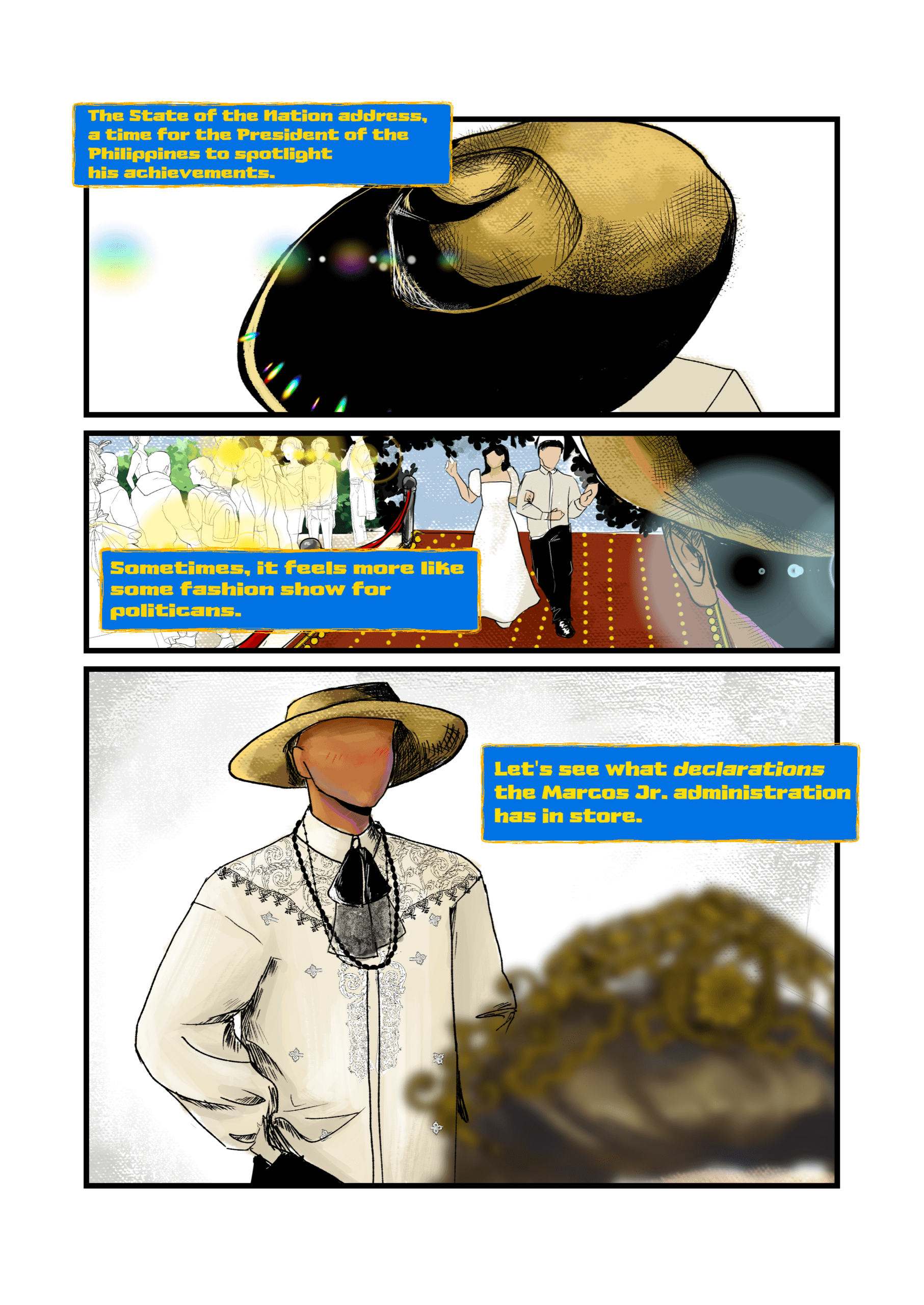
In his 2025 State of the Nation Address (SONA), President Ferdinand Marcos Jr. stated:
“Sa mga nagtatanong kung nasaan na ang ‘bente pesos na bigas’? Ito ang aking tugon. Napatunayan na natin na kaya na natin ang bente pesos sa bawat kilo ng bigas, nang hindi malulugi ang ating mga magsasaka.”
(To those asking, ‘where is the P20/kg rice’? This is my answer. We have proved that we can sell rice at P20/kg without our farmers losing money.)
A year later, the Marcos Jr. administration reported in SONA 2026 that its promised PHP 20-per-kilo rice, called the “Benteng Bigas, Meron Na” (BBM Na) program has already benefited 12 million people nationwide. Launched in May 2025 — halfway through Marcos Jr. ‘s term — the program claims to sell 15,000 to 20,000 metric tons of this PHP 20-per-kilo (USD 0.33) rice per month in around 800 Kadiwa centers nationwide. The Department of Agriculture aims to expand these Kadiwa centers to 1,500 outlets by the end of the year, with a monthly sales volume of 40,000 metric tons of rice.
As expected, the 2026 State of the Nation Address highlighted this as one of the Marcos Jr. administration’s stellar accomplishments — a promise delivered. However, with today’s worsening global food crisis, we must ask: does it actually solve hunger in the Philippines, or is it just a smokescreen “solution” to mask the root of the problem?
PH hunger figures on the rise
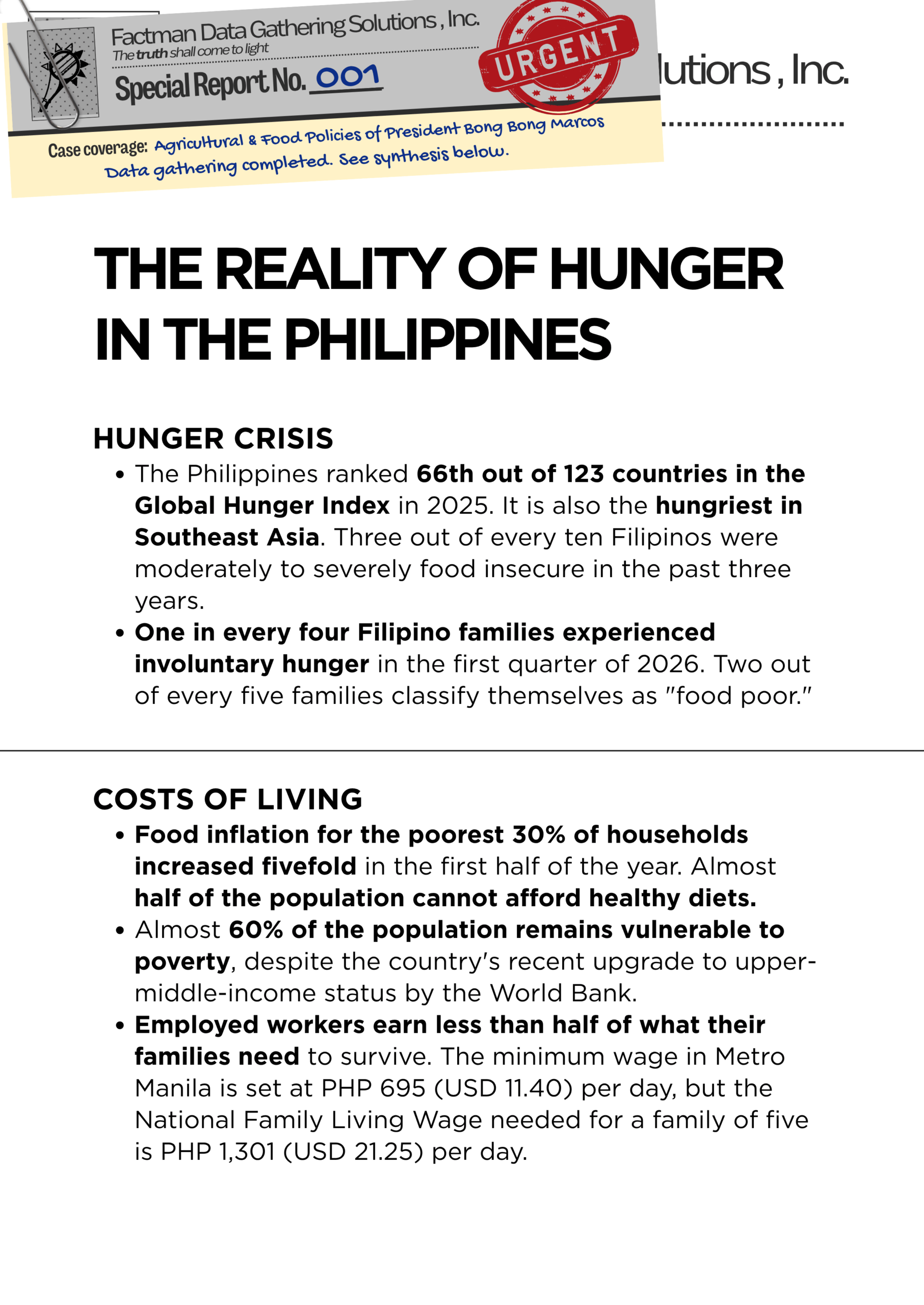
As of 2025, the Global Hunger Index classified the Philippines as having a moderate hunger level, ranking 66th out of 123 countries. In recent years, the Food and Agriculture Organization estimated that approximately 33% of the population was moderately to severely food insecure–the highest in Southeast Asia by headcount–and 3.4% were undernourished.
The need for affordable food cannot be overstated: in the most recent SWS survey, one in every four Filipino families experienced involuntary hunger, hitting 23.2% in the first quarter of 2026 — higher than last year’s average of 20.2%, as well as the 21.1% recorded in 2021, the height of the COVID-19 pandemic. Two out of every five families classify themselves as “food poor,” while more than half of those surveyed consider themselves poor.
These numbers are a far cry from the latest government data. As of 2023, 15.5% of the Philippine population or about 17.5 million Filipinos were living below the poverty line, which is PHP 91 (USD 1.64) per person per day. Almost 5 million or 4.3% of the population were living below the food threshold at PHP 64 (USD 1.16) per day.
The poverty and food thresholds are the base figures used to justify depressed wages, which are set at a minimum of PHP 695 (USD 11.4) in Metro Manila. Even if the suspended PHP 85 minimum wage hike pushed through, it is still inadequate compared to the PHP 1,301 (USD 21.25) per day National Family Living Wage for a family of five.
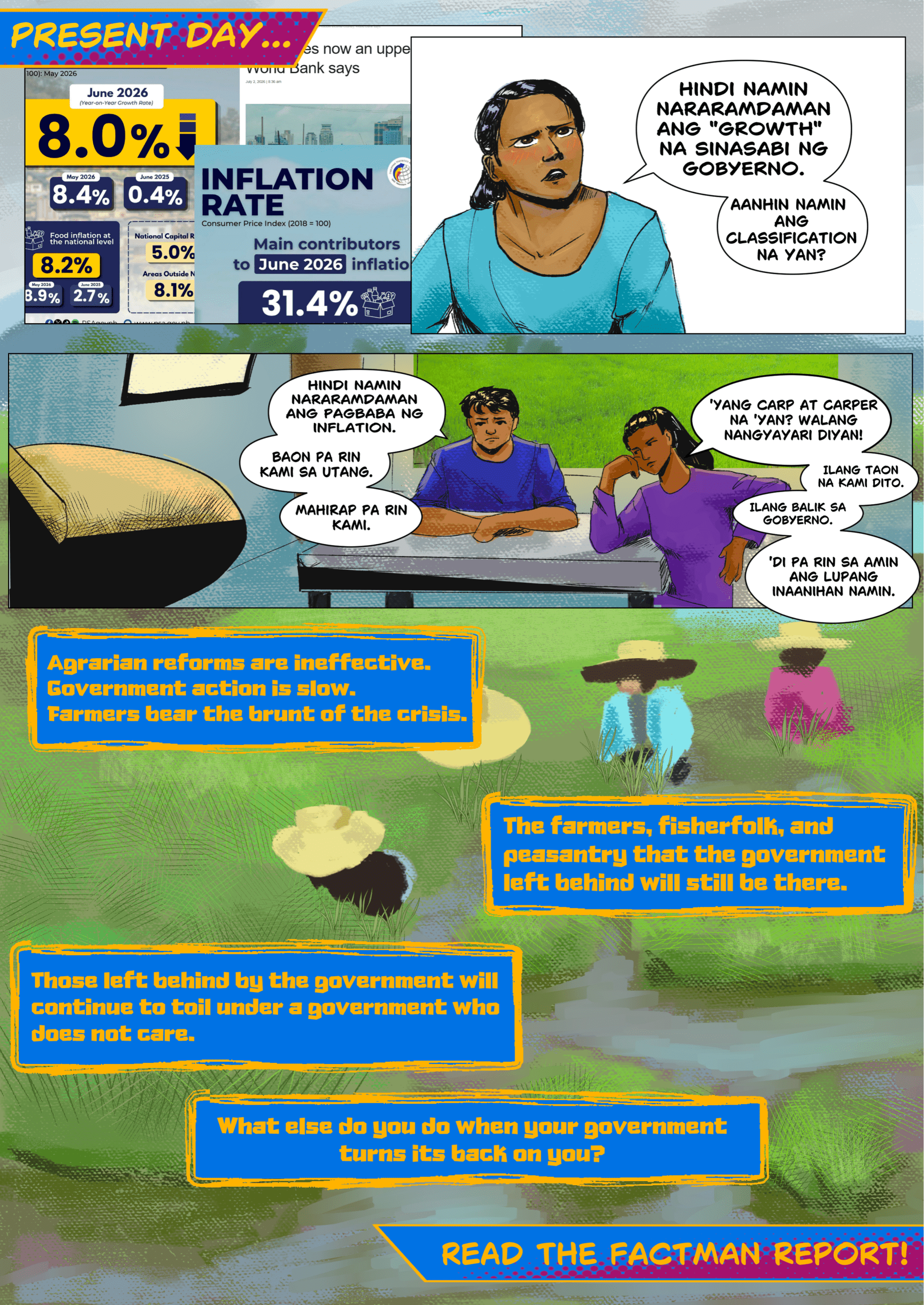
Across the country, household incomes cannot catch up with rising food costs. Southeast Asia has been hit hard by the US war on Iran, with the Philippines ranking second globally for oil price surges at 73% as of April this year. Inflation rates in the country skyrocketed from the usual 2.4% in February to 4% in March, and then to 7.2% in April. Inflation rates did slow down by May and June, but prices have remained high and do not seem to be going down any time soon. Bringing down national inflation does not translate into relief for these families, nor does it address the growing hunger crisis.
Government data also showed that food inflation has multiplied fivefold since the start of the year for the bottom 30% of households by income—or the poorest three out of every 10 households—reaching 8.2% as of June 2026.
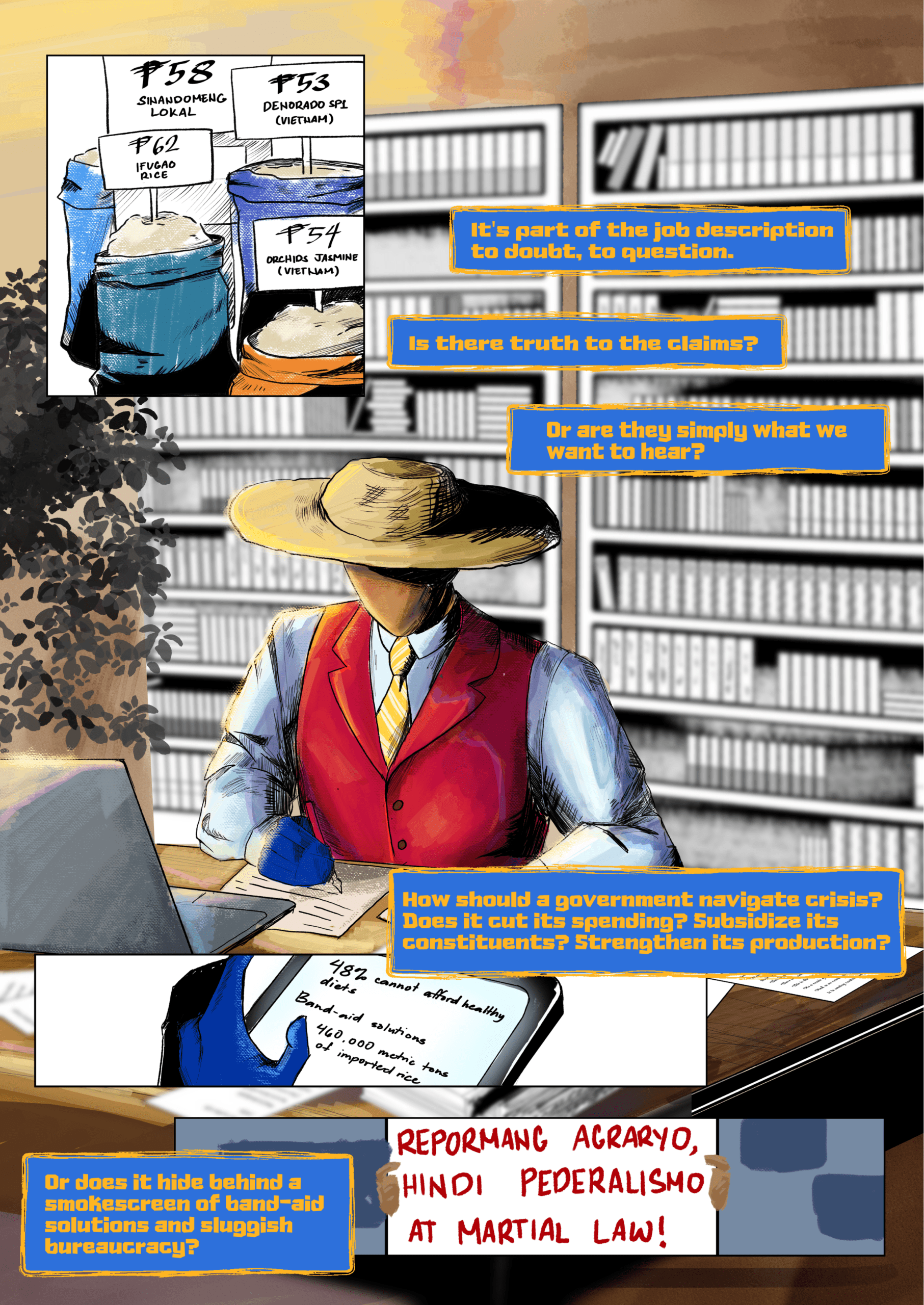
Affording food is one thing; affording a healthy diet is another. Even using the government’s official threshold figures, 48% or almost half of the population cannot afford healthy diets.
The Filipino poor bear the brunt of rising food costs, growing hungrier as prices remain high. These figures do not seem to reflect the impact of the first year of the Benteng Bigas, Meron Na! program, which further calls into question its feasibility and sustainability.
Too good to be true
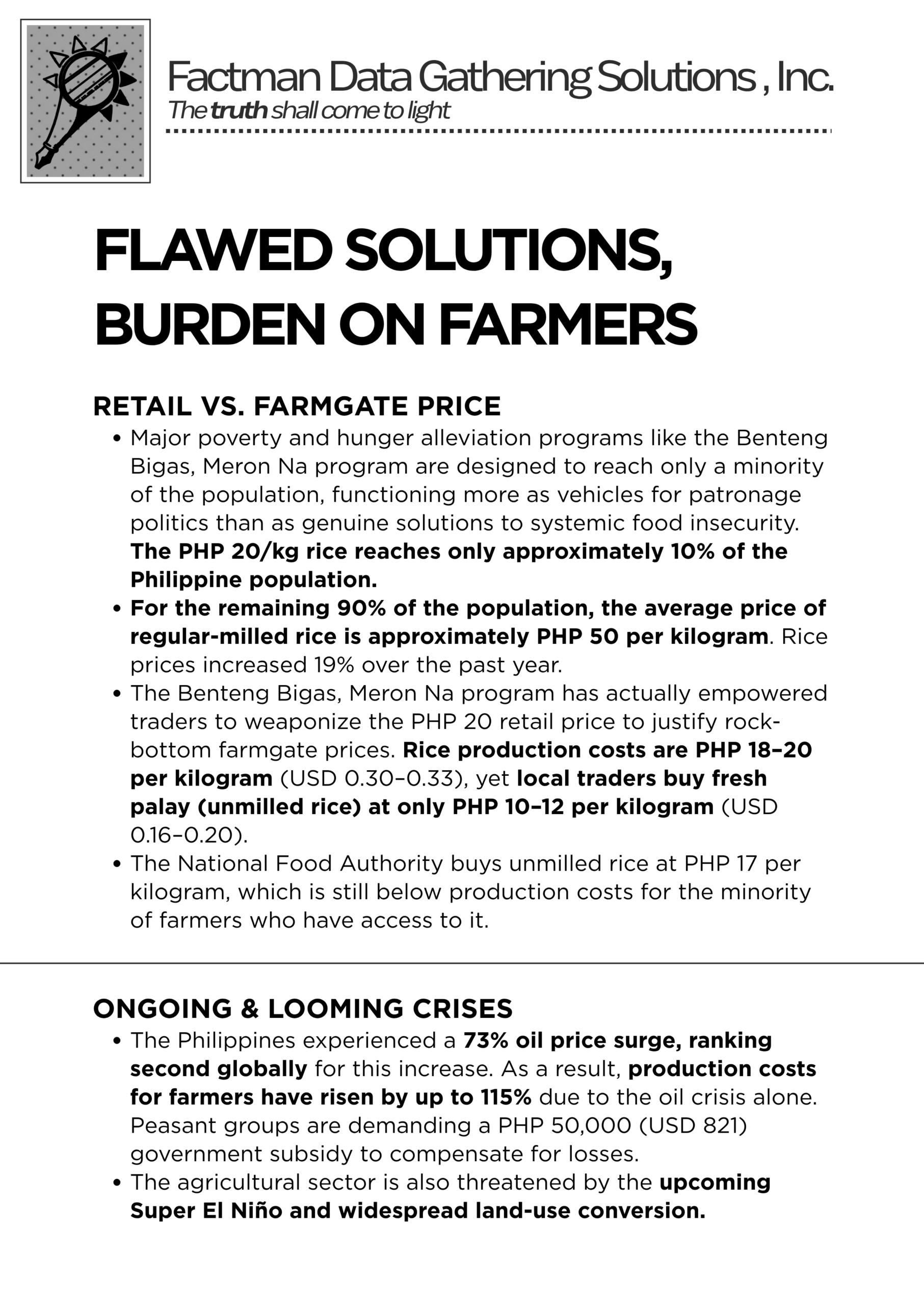
The general public has yet to feel the impact of the Benteng Bigas, Meron Na program as it is not accessible to everyone. Currently, it is available only to vulnerable groups, including persons with disabilities, beneficiaries of the Pantawid Pamilya Pilipino Program (4Ps), single parents, and senior citizens. If we are to follow government claims, the program has only reached 10% of the population.
Across the country, the average price of regular-milled rice is about PHP 50 per kilogram, a 19% increase over the past year.
Like many of the Philippine government’s poverty and hunger alleviation programs—such as the ADB-backed Walang Gutom (Zero Hunger) Program, which targets households covering only 750,000 by 2027 (or around 3% of the population) to provide PHP 3,000 (USD 49) in credit for a healthy diet—the Benteng Bigas, Meron Na program is designed to reach a minority of the population and acts as a convenient vehicle for patronage politics.
In addition, with importation competing with local food producers, it is unlikely for the program to expand and reach half of the country’s population target, especially by the end of the year.
At best, these programs provide temporary relief to target groups. However, calling them true solutions to hunger is arguable, as they are not intended to universally include the whole population.
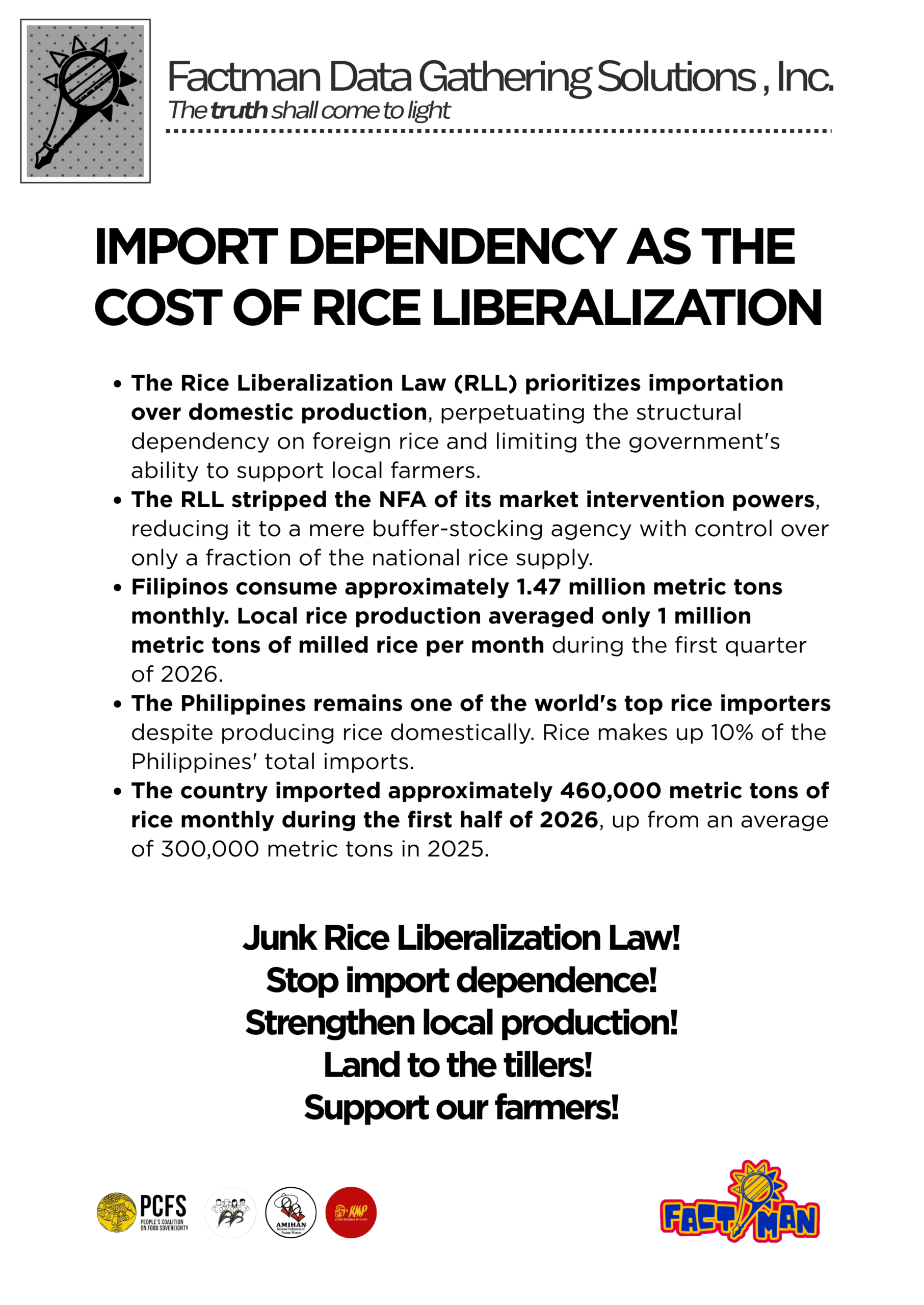
If the Benteng Bigas, Meron Na program has any saving grace, it demonstrates the government capacity to subsidize local food production and highlights the need to beef up the National Food Authority (NFA). By executing widespread retail price interventions, the agency could truly make a dent in the market and democratize the PHP 20 retail price of rice. Unfortunately, the national government has reduced the NFA’s function to a stripped-down buffer-stocking agency that can only control a small fraction of the national rice supply.
The cost for rice farmers
Let us shift our focus from the consumer to the farmers.
As the Marcos Jr. administration championed this PHP 20/kg of rice policy and proudly declared that the initiative was working, not everyone was benefitting as claimed. Low-priced rice meant lower income for rice farmers, as traders weaponized the program to legitimize rock-bottom buying prices for palay (unmilled rice).
Rice farmers are at a severe disadvantage, as farmgate prices fail to meet production costs, which sit at PHP 18 (USD 0.30) to PHP 20 (USD 0.33) per kilo. In the past three to four cropping seasons, local traders bought fresh palay at just PHP 10 (USD 0.16) to PHP 12 (USD 0.20) per kilo. For the few who managed to access the NFA, they could only sell their unmilled rice at PHP 17 (USD 0.28) per kilo—still below production costs.
Prices are heavily dictated by the Rice Liberalization Law, which prioritizes importation and limits the functions and scope of the NFA to what it is today. The monthly average of imported rice in the first half of 2026 reached about 460,000 metric tons—higher than the 2025 average of 300,000 metric tons and almost eleven times the volume distributed monthly by the program. The government aims to import 4.8 million metric tons of rice this year.
For reference, Filipinos consume about 1.47 million metric tons of rice each month. In contrast, the local rice industry produced an average of only about 1 million metric tons of milled rice per month during the first quarter of 2026, leaving a substantial gap that is filled by imports.
The country continues to be in a trade deficit, wherein imports far outweigh the exports. In May 2026, imports accounted for 63% of its global trade. Although the Philippines is advertised as an agricultural country—taking pride in its agricultural sector and deep-rooted history in the industry—it remains one of the top rice importers in the world, with rice making up 10% of its total imports.
Farmers also have to contend with rising production costs, as they are just as affected by the oil crisis as the average consumer. The agricultural sector is also threatened by the upcoming Super El Niño and widespread land-use conversion, especially in Central Luzon, which is considered the “Rice Bowl of the Philippines.”
Government response and support are severely inadequate. The Kilusang Magbubukid ng Pilipinas has called out the government’s focus on bringing down national inflation rates, because these statistics do not translate directly into the average Filipino’s life. Locals still have to grapple with rising food costs despite the alleged slowdown in inflation.
Bantay Bigas, on the other hand, has called for government subsidies to alleviate the burden of rising production costs for rice, as farmers can no longer keep up with both demand and skyrocketing prices. AMIHAN Women is calling for a PHP 50,000 (USD 821) government subsidy, as costs have risen by up to 115% due to the oil crisis. This subsidy is meant to alleviate the soaring cost of production within the agricultural sector and ease the already heavy burden on our farmers.
Persisting agricultural crisis
The Philippine agricultural sector – the sector tied to its national identity – is markedly stagnating.
According to Custodio and Sombilla (2025), over the period of 1988 to 2023, rural transformation within the Philippines was slow and sluggish. In the span of three decades, the growth has not been what it should have been. Even the highly contested topic of land reform programs such as CARP and CARPER were failures. Corruption and mismanagement of funds, along with inefficient implementation, have rendered these policies further ineffective. The country remains in a semi-feudal state with farmers still renting land they will likely never own as their landlords become richer with each harvest season, while they grow poorer and more dependent on a system that has been against them since the beginning.
There are numerous articles and papers discussing the ineffectiveness of agrarian reform in the Philippines. Many of them cite corruption, inefficient implementation, and a system that favors landed elites as the main dismantlers of effective agrarian reform. Yet, even with a mountain of research and evidence, the problem persists. Farmers are still landless, still poor, and still neglected by the government. Land distributed among farmers finds its way back into the hands of the elite, and the status quo remains unmoved.
Recently, the World Bank classified the country as an upper-middle-income country—a threshold the government has been trying to reach since last year. This new classification is supposed to attract foreign investments and increase our international credit score; a move that is marketed as the Philippines being more globally competitive. With 58.7% of the population remaining vulnerable to poverty, who is this new upper-middle-income classification really for? If the Filipino people do not feel the apparent positive effects of a rise in GDP and World Bank classification, whose “development” is this?
Despite the claimed accomplishments in the 2026 State of the Nation Address, the Philippines remains in a state of crisis with high inflation rates, skyrocketing prices, and an agricultural sector that is dutifully neglected by the government. The government will continue to champion a narrative that agricultural production is steadily increasing, that rural transformation with new roads and irrigation systems being constructed around the country is in full swing, and that the agricultural sector is not being left behind. However, the reality remains far removed from the proclamations delivered at the Batasang Pambansa. Such declarations of agricultural progress come from decision-makers insulated from the rural crisis they claim to address—a crisis sustained not by accident, but by decades of policies that have prioritized market interests and elite power over genuine agrarian transformation and people’s food sovereignty. ###
Written by Jiaane Odian (PCFS intern) and Gail Orduna (PCFS global coordinator). Comics by Jiaane Odian. Produced in fulfillment of the 2026 internship program with PCFS, in partnership with Bantay Bigas, AMIHAN, and Kilusang Magbubukid ng Pilipinas.